Metal Detector Resonance Principle
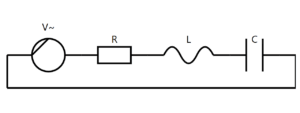
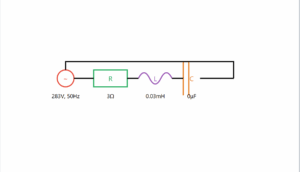
This simulation demonstrates how metal detectors work using the principle of resonance in AC circuits, as explained in Example 7.10.
ALARM! METAL DETECTED
The change in circuit current has triggered the alarm
Resonant Frequency
f = 1/(2π√(LC))
Circuit Current
I = V/Z
Impedance
Z = √(R² + (XL - XC)²)
Example
Question:
At an airport, a person is made to walk through the doorway of a metal detector for security reasons. If she/he is carrying anything made of metal, the metal detector emits a sound. On what principle does this detector work?
Solution:
The metal detector works on the principle of resonance in AC circuits. When you walk through a metal detector, you walk through a coil of many turns, connected to a capacitor that is tuned so the circuit is in resonance. If you walk through with metal in your pocket, the impedance of the circuit changes, causing a significant change in current. This change is detected and the circuitry triggers a sound alarm.
Explanation (from Example 7.10):
The metal detector works on the principle of resonance in AC circuits. When you walk through a metal detector, you walk through a coil connected to a capacitor tuned to resonance. Without metal, the circuit maintains steady current. When metal is present, it changes the circuit's impedance (Z), causing a significant current change that triggers the alarm.
Key parameters: L = 10 mH, C = 2.53 μF (resonant frequency ≈ 1 kHz), V = 10 V