Interactive Work Simulation Examples for Physics Learning
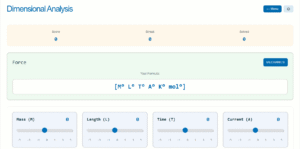
Explore comprehensive work simulation examples that demonstrate the fundamental relationship between force, displacement, and angle in mechanical systems. This educational tool provides hands-on learning experiences for students studying physics concepts.
Simulation Parameters
Physics Calculations
Understanding Work Physics and Thermal Expansion Experiment Connections
How These Work Simulation Examples Help Students Learn
These interactive work simulation examples provide students with visual representations of fundamental physics concepts. By manipulating force magnitude, displacement distance, and angle parameters, learners can observe real-time changes in calculated work values. This hands-on approach enhances understanding of the mathematical relationships governing mechanical work in physical systems.
Key Physics Concepts Demonstrated
- Work Formula: Work equals force multiplied by displacement multiplied by the cosine of the angle between them (W = F × d × cos θ).
- Force Components: Understanding how force direction affects the amount of work performed on an object.
- Maximum Efficiency: Work is maximized when force is applied parallel to the direction of motion (θ = 0°).
- Zero Work Condition: No work is performed when force is perpendicular to displacement (θ = 90°).
Connection to Thermal Expansion Experiment Applications
While this simulation focuses on mechanical work, the principles connect directly to thermal expansion experiment scenarios where materials undergo displacement due to temperature changes. In a thermal expansion experiment, internal forces within materials resist expansion, creating work relationships similar to those demonstrated here. Understanding mechanical work provides foundational knowledge for analyzing thermal systems where expansion forces act over specific displacement distances.
Students can apply the work concepts learned here to thermal expansion experiment analysis, where measuring the work required to prevent thermal expansion helps quantify material properties and thermal coefficients. This cross-connection between mechanical and thermal physics enhances comprehensive understanding of energy transfer principles in both domains.